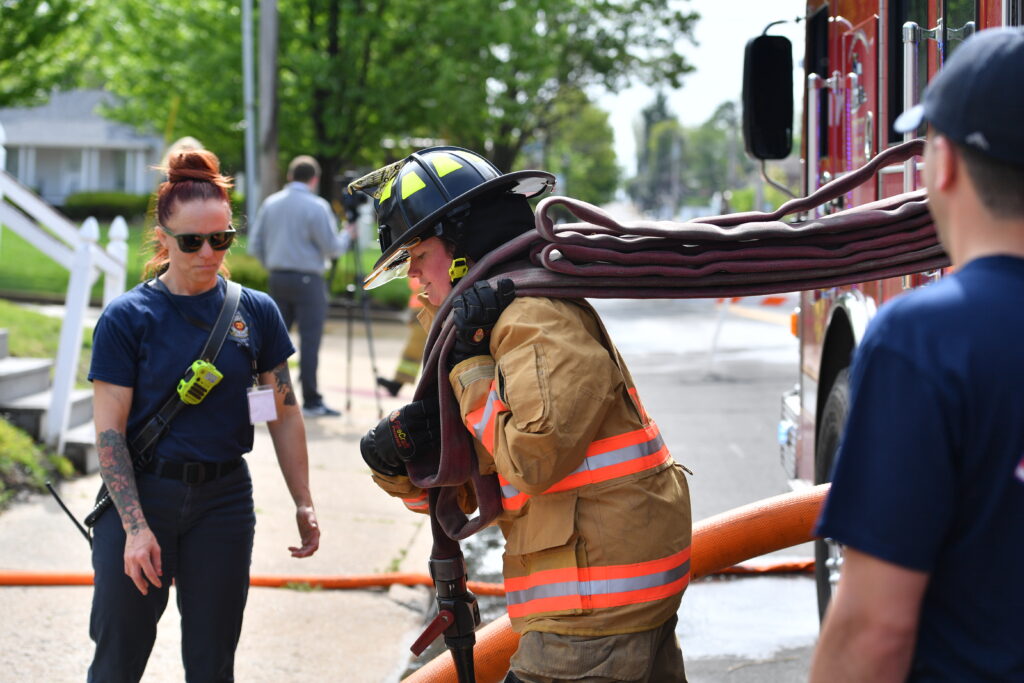
Firefighters respond to emergencies, extinguish fires, rescue people, and provide first aid. They also conduct safety inspections and educate the public on fire prevention.
The Perks
In this role you’ll respond to structure fires, medical emergencies, hazardous materials incidents, and other calls for service while working alongside law enforcement and emergency medical personnel.
36
Million
U.S. fire departments respond to 36 million emergencies per year – and a firefighter is on the front line of every one of them.
3%
Percent
Employment of firefighters is projected to grow 3 percent from 2024 to 2034, with about 27,100 openings expected each year on average.
$45000
Salary
The average salary is around $45,000 in Missouri, however starting salaries vary by District.
What Do I Need?
Qualifying for this position is more accessible than you might think. Candidates may qualify through college credits, a high school diploma with military or police experience, or five years of steady full-time work history.
Physical Fitness
Firefighting is one of the most physically demanding careers there is. Candidates must meet fitness standards and maintain their physical conditioning throughout their career.
Education / GED
A high school diploma or GED is the standard entry point for a firefighting career, with many departments offering additional training and education opportunities after hiring.
Attention to Detail
From inspecting equipment to reading a fire scene, the ability to notice and act on small details can make the difference between a successful response and a dangerous one.
Critical Thinking
No two emergencies are alike. Firefighters must quickly assess a situation and make sound decisions under pressure with limited information.
Certifications
Most departments require EMT certification and completion of a fire academy program, with additional certifications available as you advance in your career.
Communication Skills
Clear communication between crew members and incident commanders is essential on the fireground. Miscommunication in a crisis can cost lives.
Physical Fitness
Firefighting is one of the most physically demanding careers there is. Candidates must meet fitness standards and maintain their physical conditioning throughout their career.
Education / GED
A high school diploma or GED is the standard entry point for a firefighting career, with many departments offering additional training and education opportunities after hiring.
Attention to Detail
From inspecting equipment to reading a fire scene, the ability to notice and act on small details can make the difference between a successful response and a dangerous one.
Critical Thinking
No two emergencies are alike. Firefighters must quickly assess a situation and make sound decisions under pressure with limited information.
Certifications
Most departments require EMT certification and completion of a fire academy program, with additional certifications available as you advance in your career.
Communication Skills
Clear communication between crew members and incident commanders is essential on the fireground. Miscommunication in a crisis can cost lives.