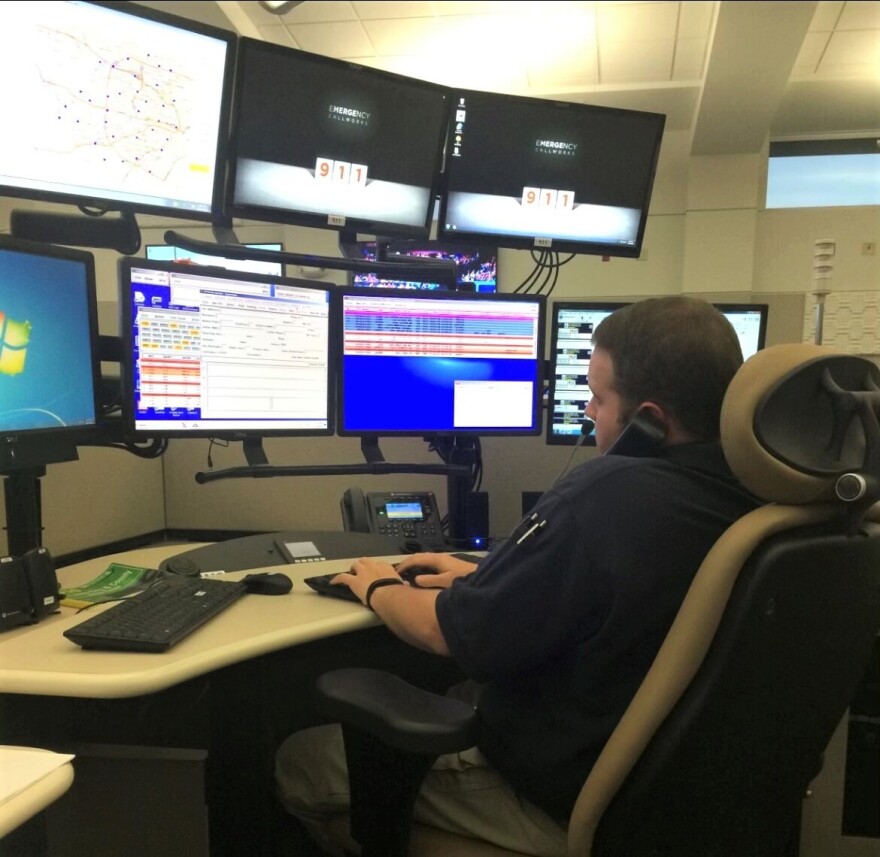
Public safety dispatchers perform work marked as difficulty processing emergency and non-emergency calls received via radio and telephone.
The Perks
In this role you’ll process both emergency and non emergency calls and radio traffic from police officers and other public safety agencies.
240
Million
The number of 911 calls made in the U.S. each year, each one answered by a dispatcher.
80%
Percent
80% of Americans will contact a 911 dispatcher at least once in their lifetime.
$65500
Salary
The average salary is around $65,500 in St. Louis.
What Do I Need?
Qualifying for this position is more accessible than you might think. Candidates may qualify through college credits, a high school diploma with military or police experience, or five years of steady full-time work history.
Certification
Most dispatchers are required to obtain Emergency Medical Dispatch (EMD) certification, with many agencies also requiring CPR and other emergency communications credentials. Requirements vary by department but certifications are typically completed during or shortly after hiring.
Decision Making
Dispatchers must assess rapidly evolving situations and determine the appropriate response in seconds. The ability to prioritize calls and allocate resources effectively can mean the difference between life and death.
Communication Skills
Dispatchers are the voice of calm in a crisis. Clear, concise communication with both callers and field units is essential to keeping every situation under control.
Multitasking
At any given moment, a dispatcher may be answering calls, monitoring radio traffic, and tracking multiple units simultaneously. The ability to manage several high-stakes tasks at once is a core requirement of the job.
Composure Under Pressure
Emergencies are rarely predictable. Dispatchers must remain steady and focused regardless of the nature or volume of calls coming in on any given shift.
Attention to Detail
Whether defusing a tense situation, testifying in court, or building trust with the community, clear and effective communication is at the core of good police work.
Certification
Most dispatchers are required to obtain Emergency Medical Dispatch (EMD) certification, with many agencies also requiring CPR and other emergency communications credentials. Requirements vary by department but certifications are typically completed during or shortly after hiring.
Decision Making
Dispatchers must assess rapidly evolving situations and determine the appropriate response in seconds. The ability to prioritize calls and allocate resources effectively can mean the difference between life and death.
Communication Skills
Dispatchers are the voice of calm in a crisis. Clear, concise communication with both callers and field units is essential to keeping every situation under control.
Multitasking
At any given moment, a dispatcher may be answering calls, monitoring radio traffic, and tracking multiple units simultaneously. The ability to manage several high-stakes tasks at once is a core requirement of the job.
Composure Under Pressure
Emergencies are rarely predictable. Dispatchers must remain steady and focused regardless of the nature or volume of calls coming in on any given shift.
Attention to Detail
Whether defusing a tense situation, testifying in court, or building trust with the community, clear and effective communication is at the core of good police work.